The Mental Edge: Psychological Conditioning Systems That Keep Elite Flankers Locked In When It Matters Most
Photo: U.S. Civilian DODEAE by Jessica Tackaberry, Public domain, via Wikimedia Commons
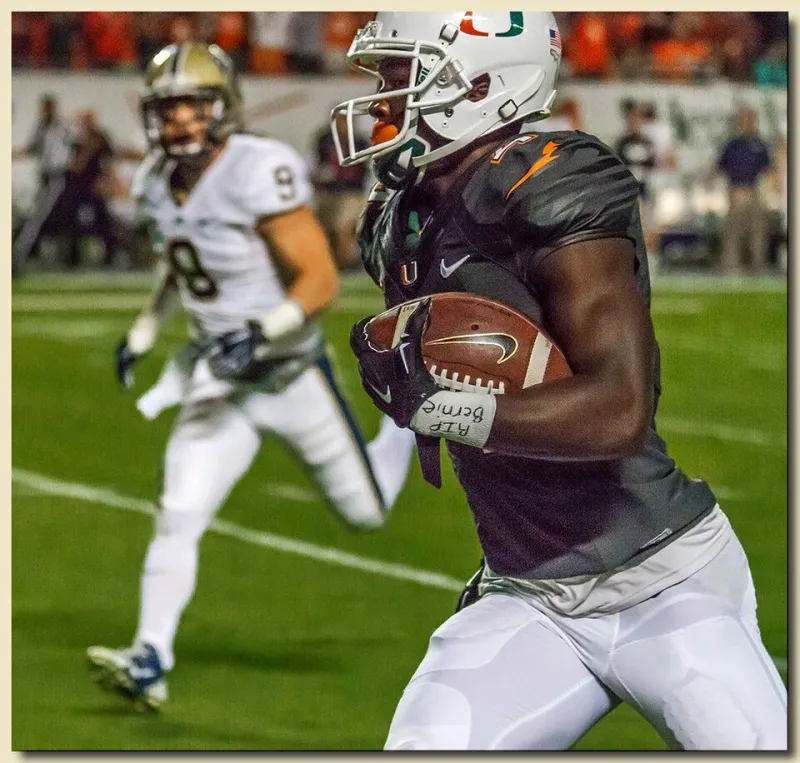
Fourth quarter. Two-minute drill. The offense needs ten yards and a first down to keep the drive alive. The flanker lines up in the slot, processes the coverage rotation at the line, and executes a precise route that creates the separation necessary for the completion. What the broadcast cameras never show is the preparation that made that moment possible—not the physical repetitions, but the psychological infrastructure built over months of deliberate mental conditioning.
The performance gap between athletes of comparable physical ability is rarely explained by strength, speed, or technique alone. At the competitive level, where physical differences narrow and game situations intensify, the decisive variable is psychological readiness. This is not a soft concept. It is a trainable system, and the most effective flankers in college and professional football treat mental conditioning with the same rigor they bring to the weight room.
Why Pressure Degrades Performance—and How to Counteract It
Understanding why performance breaks down under pressure is the first step toward building resistance to it. Sport psychologists refer to this degradation through two primary mechanisms: attentional narrowing and working memory interference.
Attentional narrowing occurs when stress hormones—primarily cortisol and adrenaline—cause an athlete to focus on a single stimulus while losing peripheral awareness. For a flanker, this might manifest as fixating on a linebacker's positioning while losing track of the safety rotation. The result is a route run on incomplete information, regardless of how well that route was practiced.
Working memory interference is equally disruptive. Under elevated stress, the cognitive load required to process formation recognition, coverage identification, and real-time route adjustment exceeds the brain's available processing bandwidth. Athletes who have not specifically trained their psychological systems to function under this load will default to the most practiced response—which is often not the correct one for the coverage they are facing.
The solution is not to eliminate pressure. It is to train the nervous system to perform within it.
Controlled Breathing as a Performance Anchor
The most immediately accessible mental conditioning tool available to competitive athletes is controlled breathing—and it remains chronically underused at every level below the professional ranks. Physiological research consistently demonstrates that deliberate breathing patterns activate the parasympathetic nervous system, counteracting the stress response and restoring cognitive clarity within 60 to 90 seconds.
The protocol used by many elite athletes is built around a simple structure: a four-count inhale through the nose, a four-count hold, and a six-count exhale through the mouth. Practiced consistently, this sequence becomes a performance anchor—a reliable reset mechanism that an athlete can deploy between plays, during timeouts, or in the moments before a critical route assignment.
The key to making this tool functional under game conditions is practicing it under simulated stress. Breathing exercises performed exclusively in calm environments produce limited transfer to competitive situations. Athletes should integrate controlled breathing into high-intensity training sessions, conditioning drills, and scrimmage situations where fatigue and competitive stakes are genuinely present.
Visualization Protocols: Building the Mental Repetition Library
Visualization—sometimes called mental rehearsal or imagery training—is among the most thoroughly researched tools in sport psychology, and its application for wide receivers is particularly well-suited to the demands of the position. A flanker must execute against an enormous variety of coverage structures, defensive personnel groupings, and situational contexts. No physical practice schedule can provide sufficient repetitions across all of these scenarios. Mental rehearsal can.
The most effective visualization protocols used by elite athletes share several structural characteristics. First, they are conducted in first-person perspective—the athlete sees the field from his own eyes, not from a camera angle. Second, they incorporate sensory detail: the sound of the crowd, the texture of turf under cleats, the physical sensation of a route break. Third, they include both successful execution and adversity management—a dropped ball followed by a composed reset, a coverage rotation that requires a route adjustment, a contested catch in traffic.
A practical weekly visualization structure for competitive flankers might look like this:
- Monday: Review the upcoming opponent's base coverage tendencies in film, then conduct a 10-minute visualization session running the primary route tree against those coverages
- Wednesday: Visualize two-minute drill scenarios—clock awareness, route priority adjustments, communication with the quarterback under noise
- Friday (pre-competition): A shorter, 5-minute activation session focused on confident execution in the specific game environment, including stadium noise and crowd energy
Consistency matters more than duration. Athletes who practice visualization three to four times per week for ten minutes each session will develop a more robust mental repetition library than those who attempt a single extended session before game day.
Managing Performance Anxiety: The Reappraisal Approach
Performance anxiety is universal among competitive athletes. The distinction between those who manage it effectively and those who are managed by it lies not in eliminating the physiological arousal, but in how that arousal is interpreted.
Research from sport psychology consistently supports a technique known as cognitive reappraisal—the deliberate reframing of anxiety symptoms as indicators of readiness rather than signals of threat. An elevated heart rate before a critical play is not evidence that something is wrong. It is evidence that the body has prepared itself to perform. A flanker who has practiced reappraisal can acknowledge the physical sensation and redirect attention to the task at hand rather than spiraling into self-monitoring that compounds the anxiety.
Athletes can begin building this skill through journaling. After competition, documenting the physical and cognitive experience of anxiety—when it appeared, what triggered it, and how it influenced performance—creates self-awareness that makes reappraisal more accessible in future situations. Over time, the pattern recognition developed through consistent journaling allows athletes to identify anxiety earlier and apply reappraisal before the arousal reaches a level that disrupts execution.
Focus Cues and Pre-Play Routines
Elite performers across competitive sports rely on pre-performance routines to establish consistent psychological states before critical moments. For flankers, a pre-play focus routine serves as a cognitive reset between each snap—a structured sequence that clears residual thought from the previous play and directs attention to the immediate task.
Effective focus cues are brief, physical, and personal. A specific hand motion, a verbal self-cue repeated internally, or a deliberate breath taken at the line of scrimmage can all function as triggers that signal the transition from processing to execution. The cue itself is less important than the consistency with which it is practiced. When a focus cue is embedded through hundreds of repetitions in practice, it becomes a reliable anchor under game conditions.
Building this routine requires intentionality during training. Athletes who run routes in practice without a consistent pre-snap routine are missing a significant development opportunity. Every repetition in practice is a chance to reinforce the psychological habit that will be available when the game situation demands it most.
Integrating Mental Conditioning into Weekly Training
Mental conditioning does not require additional hours in the day. It requires deliberate integration into the training time athletes are already investing. A practical weekly structure for competitive flankers might incorporate:
- Controlled breathing: 5 minutes integrated into post-practice cooldown, three days per week
- Visualization: 10 minutes following film sessions, focused on the specific coverage situations studied that day
- Focus cue practice: Applied consistently during every route repetition in individual and team periods
- Journaling: 5 to 10 minutes post-competition, reviewing anxiety patterns and decision-making quality
Over a full competitive season, this investment compounds. Athletes who build psychological conditioning into their development system arrive at the end of the season with a mental infrastructure that has been stress-tested across hundreds of practice and competition situations. That infrastructure is what makes the fourth-quarter, two-minute drive feel manageable—not because the pressure has diminished, but because the athlete has been systematically prepared to perform within it.