After the Drop: How Elite Flankers Build a Systematic Recovery Protocol That Restores Confidence and Competitive Edge
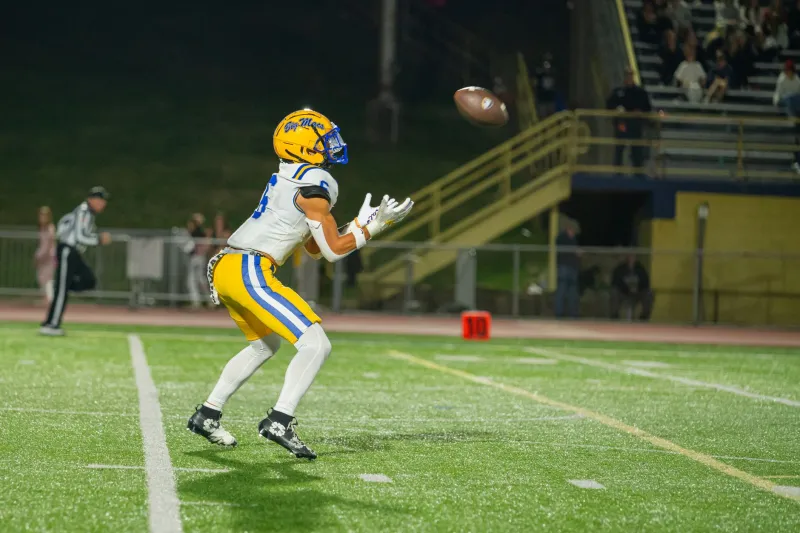
There is a particular silence that follows a dropped ball in a critical moment. It is not the silence of a stadium holding its breath — it is the internal silence of a receiver whose hands have just betrayed everything they have trained to execute. For a flanker operating at the competitive level, a catastrophic drop is not merely a statistical event. It is a neurological disruption, a psychological wound, and — if left unaddressed — the beginning of a mechanical regression that compounds with every subsequent target.
Elite athletic development does not end at the weight room or the route tree. True performance resilience demands an equally rigorous approach to mental recovery. The question is not whether a flanker will experience a high-stakes drop. The question is whether their preparation has built the structural capacity to absorb that failure and return to peak function without residual damage.
The Neuroscience of Failure Memory
When a receiver drops a catchable ball in a meaningful game situation, the brain does not simply log the event and move on. The amygdala — the brain's primary threat-processing center — encodes high-emotion failures with disproportionate neurological weight. Research in sports psychology has consistently demonstrated that negative performance memories formed under stress are retrieved faster and with greater vividness than equivalent positive memories.
For a flanker, this creates a feedback loop that is both predictable and dangerous. The next time the receiver enters a similar game situation — third down, tight coverage, ball in the air — the amygdala fires a threat signal before the hands even engage. Muscle tension increases. Grip timing shifts. The very mechanics that have been drilled into automaticity get interrupted by a neurological alarm system that is trying, counterproductively, to protect the athlete from repeating the failure.
This is not a character flaw. It is a biological response to a perceived threat. Understanding that distinction is the first step in building a recovery protocol that actually works.
Structured Reframing: Separating the Event From the Identity
The most common mistake flankers make after a critical drop is conflating the error with their identity as a receiver. Phrases like "I'm a guy who drops big catches" or "my hands aren't reliable under pressure" are not accurate assessments — they are cognitive distortions that masquerade as honest self-evaluation.
Structured reframing is the clinical process of examining the specific conditions of the failure without attaching global meaning to it. A well-designed reframing session, ideally conducted with a sports psychologist or a position coach trained in performance psychology, walks the athlete through a series of targeted questions: What were the exact mechanical conditions of the drop? Was it a hand placement error, a concentration lapse, a route timing miscommunication? What environmental factors — crowd noise, defensive contact, fatigue — were present?
The goal is not to excuse the error. It is to locate it precisely and remove its power to generate broad, paralyzing conclusions. A drop caused by poor hand positioning is a technical problem with a technical solution. Treating it as evidence of fundamental inadequacy transforms a correctable fault into an identity anchor.
Game Film as Tactical Intelligence, Not Evidence of Failure
Many flankers instinctively avoid reviewing film of their worst moments. The discomfort is understandable, but the avoidance is costly. When used correctly, game film of a catastrophic drop is one of the most powerful recovery tools available.
The critical variable is the framing. Film review conducted in an emotionally raw state — alone, immediately after the game, without structure — typically reinforces negative memory encoding. The athlete watches the drop on repeat, each viewing deepening the neural groove of failure.
Contrast that with structured film review conducted 24 to 48 hours post-game, with a coach present, using a specific analytical framework. In this context, the same footage becomes data. The receiver can observe their hand position frame by frame, identify the precise moment the mechanics deviated from the trained pattern, and construct a corrective action plan. The film is no longer a record of failure — it is a diagnostic tool that generates forward-looking tactical knowledge.
Advanced programs also incorporate contrast film sessions, where the drop footage is reviewed alongside successful catches made under similar conditions. This neurological juxtaposition reinforces the truth that the athlete is capable of executing the skill, while simultaneously identifying the specific variables that differentiated the failure from the success.
Competitive Simulation: Rebuilding Trust Through Controlled Exposure
Cognitive reframing and film analysis address the mental architecture of recovery. But for a flanker, trust in the hands must ultimately be rebuilt through physical repetition under pressure. The mechanism is progressive desensitization — controlled exposure to the conditions of the failure in a structured practice environment where the stakes are real enough to trigger the threat response but manageable enough to allow successful execution.
This begins with high-repetition catching drills in low-pressure contexts, designed purely to reinforce the automaticity of correct mechanics. As confidence rebuilds, the simulation escalates: contested catches with defensive pressure, noise-simulated environments, third-down scenarios with coaches vocalizing the game situation. Each successful catch under simulated pressure chips away at the threat encoding that the original drop created.
The sequencing matters enormously. Moving too quickly to high-pressure simulation before basic mechanical confidence is restored can re-trigger the amygdala response and deepen the regression. The protocol must be individualized, with coaches monitoring not just catch success rates but behavioral indicators — hand tension, eye contact with the ball, body language after incompletions — that signal where the athlete sits on the recovery curve.
The Role of Team Environment in Accelerating Recovery
No mental reset protocol operates in isolation. The team environment surrounding a flanker after a high-stakes drop either accelerates or impedes recovery. Coaching staffs that respond to drops with public criticism, reduced target volume, or visible loss of confidence in the receiver create the precise psychological conditions that make recovery harder.
Elite programs understand that the period immediately following a catastrophic drop is one of the highest-leverage coaching moments available. Deliberate, private feedback that is specific and constructive, followed by early opportunities in the next practice to execute successfully, sends a clear message: the organization's confidence in the athlete has not been withdrawn. That message is not sentiment — it is a neurological intervention that interrupts the threat-encoding cycle before it fully consolidates.
Building the Protocol Before You Need It
The most sophisticated element of elite mental recovery is preemptive construction. Flankers who have never thought systematically about how they will respond to a catastrophic drop are at the mercy of instinct when it occurs. Flankers who have built a recovery protocol — who know exactly what steps they will take, who they will speak with, how they will use film, and how they will structure their next practice — arrive at the moment of failure with a plan already in place.
That preparation does not prevent the emotional impact of a high-stakes drop. It simply ensures that the response is structured rather than reactive, forward-looking rather than recursive. In a position where confidence and hand reliability are inseparable, that distinction is the difference between a flanker who recovers in one week and one who carries the weight of a single drop for an entire season.