Twelve Weeks to September: The Off-Season Phases That Separate Camp Starters From Camp Bodies
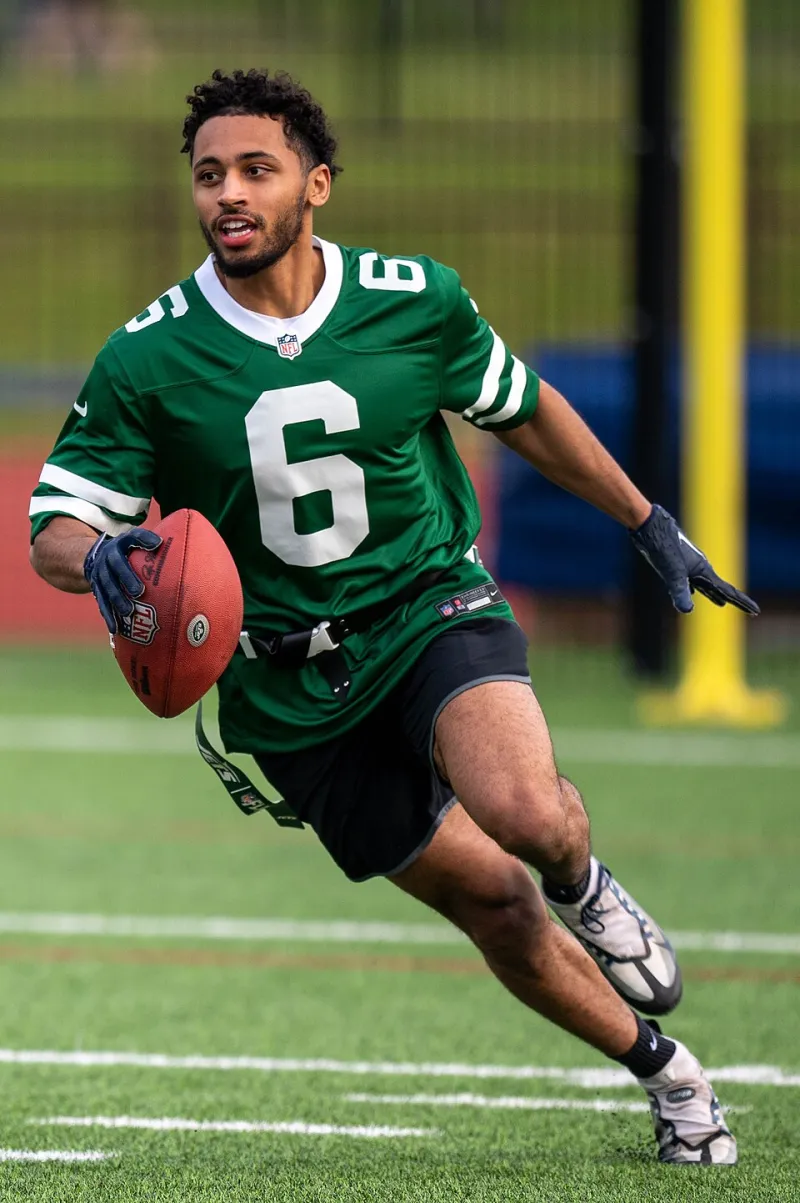
Photo: U.S. Air Force photo by Airman 1st Class Alexander Vasquez, Public domain, via Wikimedia Commons
Every August, depth charts across the country get decided by work nobody watched. The flanker who spent July running refined releases against air with purpose looks different from the one who spent the summer posting highlight clips and hoping. The difference is not talent. It is architecture — a structured twelve-week plan executed before anyone is watching.
Here is the blueprint we build for competitive flankers, broken into three distinct phases with concrete weekly objectives.
Phase One: Rebuild the Chassis (Weeks 1–4)
The mistake most receivers make is sprinting into speed work on a body that spent the post-season deconditioned. Phase one is unglamorous by design.
Weeks 1–2: Movement quality and tissue tolerance. Prioritize hip mobility screening, ankle dorsiflexion work, and eccentric loading — slow-tempo split squats, Nordic curls, and single-leg RDLs at three to four sets each. Two lifting sessions per week, three aerobic base sessions at low intensity. Your objective: zero pain through full range of motion and a resting heart rate trending down.
Weeks 3–4: Force production foundation. Add trap bar deadlifts and rear-foot-elevated split squats at moderate loads. Introduce change-of-direction mechanics at 70 percent intensity — deceleration drills, lateral shuffles, and 5-10-5 shuttles with emphasis on plant-foot angles. The goal entering week five is a clean biomechanical baseline you can load without compensation.
Phase Two: Build the Engine (Weeks 5–8)
Now speed becomes the priority, but speed in the specific patterns a flanker actually uses.
Weeks 5–6: Acceleration and top-end mechanics. Three sprint sessions weekly: hill sprints or heavy-resistance starts on day one, flying 20s at 90–95 percent on day two, and curved runs that mirror the bend of a deep over route. Keep total sprint volume under 400 meters per session. Sprint quality collapses with fatigue, and sloppy reps at full speed are how hamstring injuries happen in June.
Weeks 7–8: Route-specific speed. Merge sprint work with position drills. Releases off the line at game tempo, stems against cones or a partner's shadow, and break mechanics at 90 percent intensity with full deceleration. Begin controlled one-on-ones if a quarterback is available. The measurable target: shave two-tenths off your pro-style shuttle and hold your vertical stem without drifting.
Phase Three: Sharpen the Blade (Weeks 9–12)
The final phase converts physical capacity into football readiness.
Weeks 9–10: Integration under fatigue. Structure drills so technical work happens at the end of conditioning sessions — because that is when fourth-quarter catches are won. Route trees against air, then against live coverage, with a hard rule: every rep ends with a catch at full extension or a clean hand-fight finish.
Weeks 11–12: Taper and simulation. Cut lifting volume by 40 percent while maintaining intensity. Run three full-speed practice simulations with your quarterback, scripted and filmed. Sleep becomes non-negotiable — eight-plus hours, tracked. Enter the final week feeling undertrained and hungry, not worn down.
The Recovery Schedule Nobody Publishes
Across all twelve weeks, recovery is programmed, not hoped for. One full rest day weekly. A deload week every fourth week where sprint volume halves. Soft tissue work three times weekly, and a simple morning readiness check — resting heart rate, body weight, mood rating — that tells you when to push and when to pull back.
Camp arrives for everyone on the same date. It does not arrive for everyone in the same condition. Twelve weeks of deliberate architecture means you are not showing up to prove you belong. You are showing up to take the job.