Wired to Drop: The Neuroscience Behind Receiving Errors and the Training Systems That Correct Them
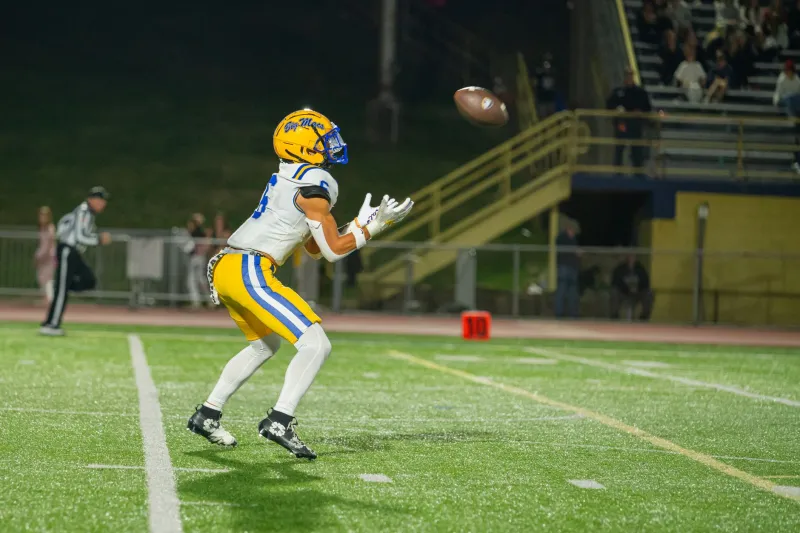
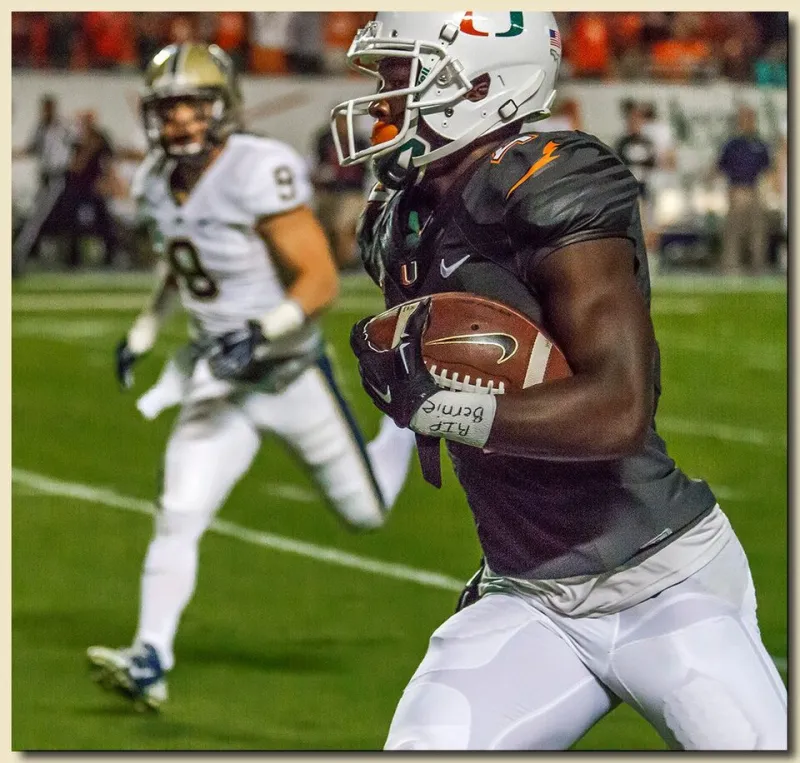
Every competitive flanker has experienced it. The ball arrives on a clean route, the quarterback's timing is precise, and somehow the pass slips through what should have been a secure catch window. Teammates and coaches exchange glances. The athlete shakes his head. From the outside, it looks like a concentration lapse. From a sports science perspective, it is something far more complex — and far more correctable.
Dropped passes at the competitive level are not primarily a hand-strength problem. They are not a grip issue. In the overwhelming majority of cases, they are a perception and prediction failure — one that begins in the visual cortex long before the ball ever reaches the fingertips.
The Millisecond Gap That Changes Everything
When a football leaves a quarterback's hand, a flanker's visual system must accomplish an extraordinary number of tasks almost simultaneously. The athlete must track the ball's trajectory, calculate its arrival point, adjust body positioning, and coordinate the precise muscular contractions required for a clean reception — all within a window that often measures less than half a second.
Researchers studying visuomotor integration in sport have identified what is commonly referred to as the "quiet eye" period: a brief interval during which elite catchers lock their gaze onto a specific target zone before initiating the catch. Athletes who maintain a longer, more stable quiet eye window consistently demonstrate higher catch completion rates under pressure. Flankers who have not trained this skill tend to shift their gaze prematurely — often toward an incoming defender — breaking the neurological chain that connects visual input to motor output.
The result is a hand position that arrives late, at the wrong angle, or with insufficient grip pressure. The ball does not slip through because the athlete lacks ability. It slips through because the brain issued incomplete instructions.
Why Practice Catches and Game Catches Are Fundamentally Different
This is the distinction most training programs fail to address. During a Tuesday walkthrough or a low-intensity individual session, a flanker's nervous system operates in a relatively calm state. The prefrontal cortex is engaged, threat perception is low, and the athlete can focus almost entirely on tracking the ball. Catches feel routine because, neurologically, they are.
Game conditions introduce an entirely different physiological environment. Elevated cortisol and adrenaline narrow attentional focus. The amygdala begins flagging incoming defenders as threats, pulling cognitive resources away from the catch itself. Heart rate elevation affects fine motor precision. The athlete is, in a very real sense, catching with a different nervous system than the one he trained with all week.
This gap — between the nervous system that practices and the nervous system that plays — is the catch window problem. Bridging it requires deliberate, systematic exposure to the stressors that game environments produce.
Building Predictive Catching Mechanics
Elite receiving is not reactive. It is predictive. The most effective flankers in competitive football are not waiting to see where the ball arrives before committing their hands. They are using trajectory cues, release angle, and quarterback body mechanics to pre-position their catch window fractions of a second before contact. This predictive capability is trainable, but it requires a specific type of repetition that most programs underutilize.
Trajectory-Reading Progressions
Begin each receiving session with a visual tracking phase before any catching occurs. A coach or machine launches balls at varying trajectories while the athlete calls out the predicted landing zone before the ball arrives. This exercise isolates the visual prediction component from the motor response, forcing the athlete to consciously develop the tracking habits that will later become automatic.
Once the athlete demonstrates consistent prediction accuracy, integrate the catch. The sequence — predict, then catch — trains the brain to commit to a catch window before the ball arrives rather than adjusting reactively at the last moment.
Distraction-Layer Drills
Game-realistic catching training must include genuine cognitive interference. Structure drills so that the flanker receives verbal commands, hand signals, or simulated defensive pressure simultaneously with the thrown ball. The goal is not to make the drill harder for the sake of difficulty. The goal is to replicate the attentional competition that exists on every snap in a live game.
A practical format: the athlete runs a route while a coach standing five yards off the line calls out a color or number during the route break. The athlete must catch the ball and simultaneously respond to the called cue. Over time, this dual-task structure builds the neural efficiency required to maintain catch focus while processing environmental noise.
High-Velocity Hand-Eye Laddering
Catching mechanics degrade at speed. Athletes who are technically sound at moderate velocity often break down when ball speed increases significantly. Incorporate machine-thrown balls at progressively higher speeds across a training block, beginning at roughly 70 percent of game-speed delivery and advancing incrementally over four to six weeks.
At each velocity threshold, emphasize hand positioning before contact rather than adjustment on contact. The athlete should be able to describe where his hands will meet the ball before it arrives. That conscious articulation accelerates the conversion of deliberate technique into automatic motor pattern.
The Role of Grip Pressure in Catch Security
Biomechanics research consistently identifies grip pressure timing as a critical variable in catch security. Athletes who apply maximum grip pressure too early — essentially squeezing before the ball is fully in the hands — create a rigid surface that deflects rather than absorbs. Athletes who apply pressure too late allow the ball to bounce out of an insufficiently closed hand.
Optimal catching mechanics involve a brief absorption phase immediately at contact, followed by rapid grip closure. This sequence is trainable through targeted proprioceptive work, including single-hand catching with varying ball weights and textured surfaces that force the athlete to develop tactile sensitivity rather than relying purely on visual confirmation.
Structuring a Weekly Receiving Protocol
For flankers looking to address the catch window problem systematically, the following weekly structure provides a practical starting point:
- Day 1: Visual tracking and prediction work without catching (15 minutes). Focus exclusively on trajectory reading and pre-contact positioning.
- Day 3: Dual-task distraction drills integrated into route running (20 minutes). Vary the cognitive interference demand across sets.
- Day 5: High-velocity machine work at progressive speeds (15 minutes). Track grip pressure timing and hand position consistency across velocity increments.
This is not a substitute for standard route-running and timing work. It is a supplement specifically designed to address the neurological gap between practice repetitions and game-speed performance.
The Competitive Advantage of Catch Certainty
In competitive football, the difference between a reliable receiver and an inconsistent one often comes down to a few plays per game. Those plays, compounded across a season, determine roster spots, depth chart positions, and ultimately career trajectories. A flanker who has trained his visual and motor systems to operate under genuine game pressure does not just catch more balls. He catches the balls that matter most — the third-down conversions, the red-zone opportunities, the game-defining moments when defensive chaos is at its highest and the catch window is at its narrowest.
The hands are not the problem. The system behind the hands is. Train the system accordingly.