Frozen Hands, Wasted Reps: Five Pregame Errors That Sink Cold-Weather Receivers

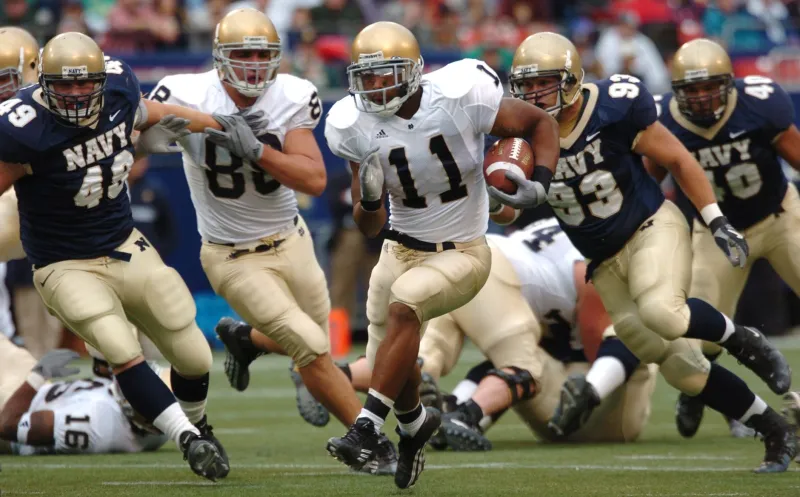
Photo: Silesia711, CC BY-SA 4.0, via Wikimedia Commons
Ask any veteran receiver who has played a December game in Green Bay or Buffalo: the elements don't just make the ball harder to catch. They make you harder to be. And the difference between a receiver who shows up in the fourth quarter and one who disappears often gets decided before kickoff — in the fifteen minutes most athletes waste.
Below are the five warmup failures we see most often in cold-weather preparation, each paired with a correction you can run in a standard pregame window.
Mistake 1: Warming Up in the Locker Room
The most common error is structural. Athletes raise their core temperature indoors, then walk into 30-degree air and lose most of that warmth within minutes of stepping onto the field.
The fix: Shift the bulk of your activation work outdoors. Use the indoor time only for equipment, mental reps, and brief static mobility. Your elevated heart rate should happen in the environment you're about to compete in, not sixty yards away from it.
Mistake 2: Ignoring Hand and Forearm Blood Flow
Cold constricts peripheral circulation first. Your hands are the last extremities to warm and the first to go numb — and a receiver whose fingers can't feel the ball's texture catches with hesitation, even subconsciously.
The fix: Dedicated hand activation in the final ten minutes before kickoff: high-rep wrist and forearm work with resistance bands, rapid fist clenching cycles, and catching short, easy passes bare-handed early in the sequence before switching to gloves. Keep hand warmers in reserve, but don't rely on them as a substitute for blood flow.
Mistake 3: Static Stretching as the Main Event
Long static holds in cold tissue do little for performance and may temporarily reduce power output. Yet it remains the default pregame ritual for too many athletes, especially at the high school level.
The fix: Compress static work to under five minutes, then transition immediately to dynamic movement — leg swings, walking lunges with rotation, build-up runs. Muscle activation, not muscle lengthening, is the pregame objective.
Mistake 4: No Progressive Sprint Exposure
Cold muscles and cold tendons are stiffer, and the risk-reward math of sprinting changes. Athletes who skip graduated speed work either enter the game with unprepared tissue or try to compensate by going 100% on their first sprint — a recipe for a hamstring pull on punt coverage.
The fix: A strict ramp: two builds at 50%, two at 70%, one at 90%, one full-speed rep. Five minutes total. This primes both the nervous system and the tissue elasticity you'll need on your first route.
Mistake 5: Treating the Warmup as Finished at Kickoff
The warmup ends when the game ends, not when the anthem plays. Cold-weather games feature long defensive drives, stalled offenses, and sudden temperature drops after sunset. A receiver who sits inert for twenty-five minutes of possession football loses everything the warmup built.
The fix: Maintain between-series routines — light banded work on the sideline, shadow route footwork during TV timeouts, coordinated hand activation before every drive. Elite cold-weather receivers are the ones still moving on the sideline in the fourth quarter.
The Bigger Principle
Cold-weather preparation isn't about enduring the elements; it's about engineering your physiology to perform inside them. Every one of these fixes fits inside a standard pregame window. The athletes who execute them aren't tougher than the competition — they're simply better prepared for a game the weather was always going to complicate.